Draw — 6 posts
1
Coordinates
6 coordinates
6 selected
▼
| # | Code | Theme | Subject | Style | Awareness | Source |
|---|---|---|---|---|---|---|
| 1 | T2S1A2 | treatments | T2 — Neck Pain | photography | A2 — Problem-aware | CURATED |
| 2 | T3S2A2 | treatments | T3 — Sciatica | graphic-design | A2 — Problem-aware | CURATED |
| 3 | T4S3A2 | treatments | T4 — Car Accident Injuries | illustrative-3D | A2 — Problem-aware | CURATED |
| 4 | T1S4A2 | treatments | T1 — Back Pain | comparison-card | A2 — Problem-aware | CURATED |
| 5 | L5S5A2 | lifestyle | L5 — Sedentary posture loading the neck and lower back | qa-card | A2 — Problem-aware | CURATED |
| 6 | C3S6 | clinic | C3 — Post-surgical patients rebuilding function | myth-buster | — | CURATED |
2
Content Briefs
6 briefs · 2026-06-12T11:13
6 briefs generated
▼
1.
T2S1A2
photography
Problem-aware
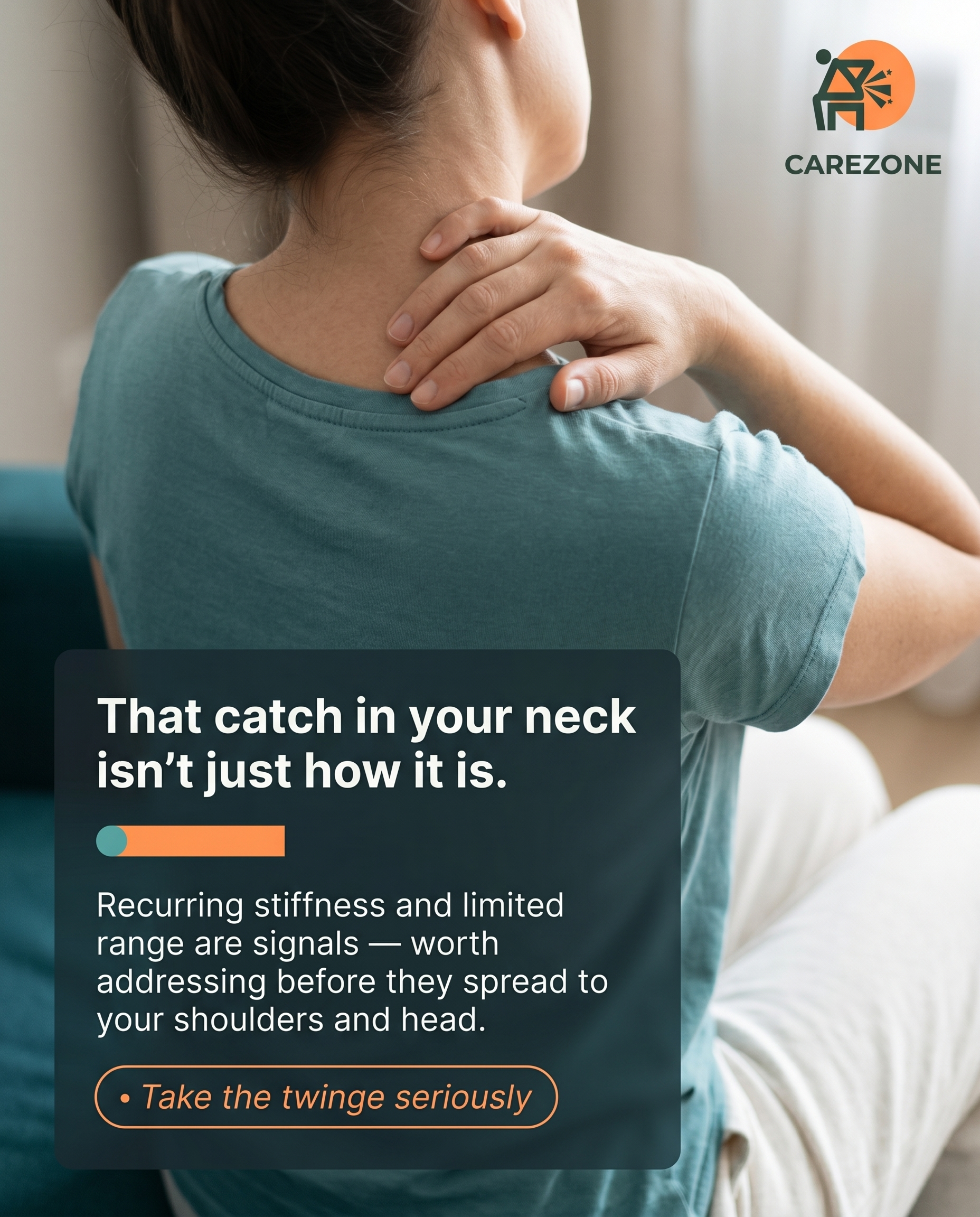
A close, real-life photo capturing the moment of reaching to check a blind spot or turning to a screen and feeling that catch in the neck. The message validates that stiffness you keep working around: recurring neck tightness and limited range aren't just 'how it is' — they're a signal worth taking seriously before it spreads to your shoulders and head.
Content: A close, real-life photo capturing the moment of reaching to check a blind spot or turning to a screen and feeling that catch in the neck. The message validates that stiffness you keep working around: recurring neck tightness and limited range aren't just 'how it is' — they're a signal worth taking seriously before it spreads to your shoulders and head.
Style: photography
2.
T3S2A2
graphic-design
Problem-aware
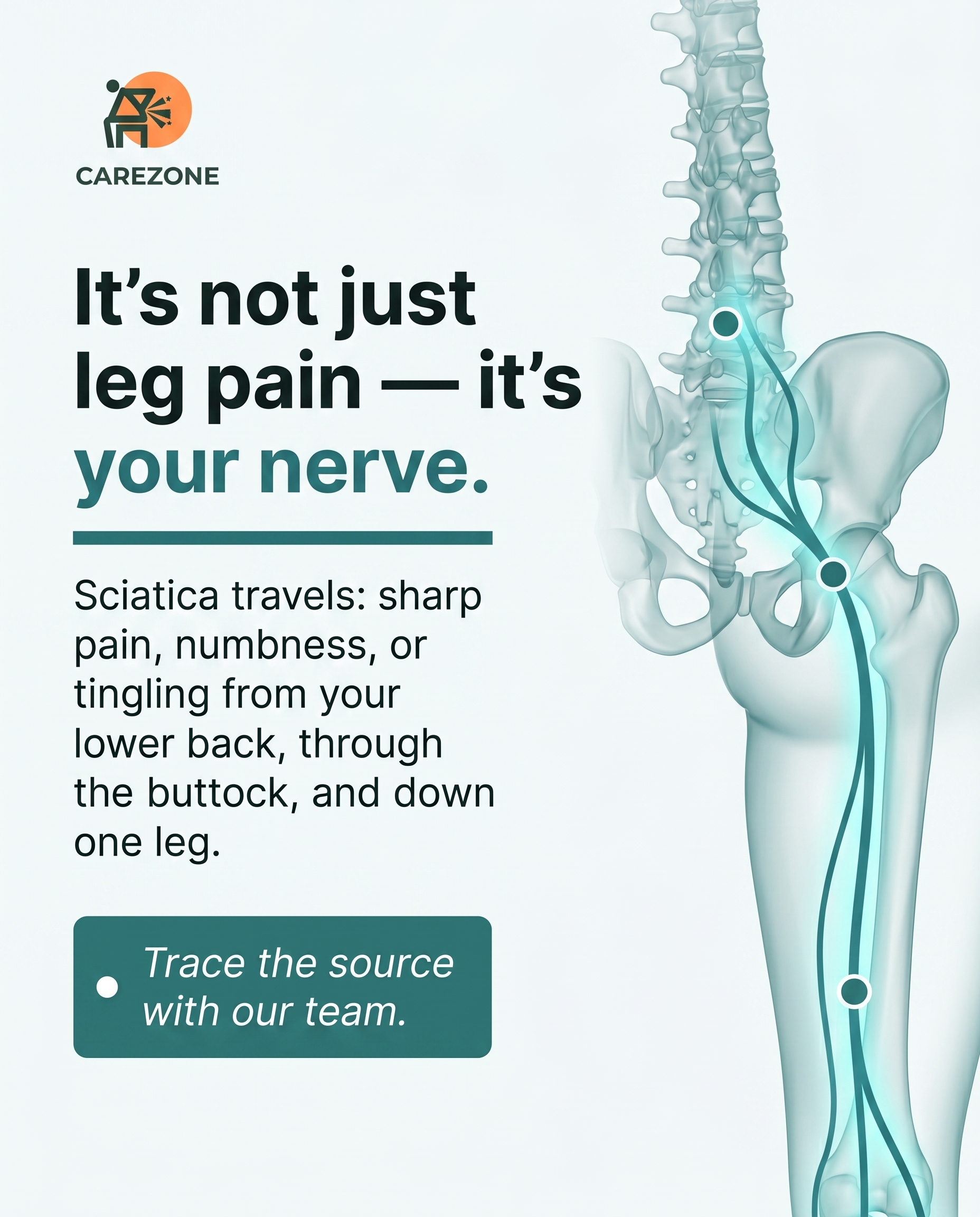
A clean graphic mapping how sciatica actually presents — sharp pain, numbness, or tingling that travels from the lower back down through the buttock and leg, often on one side. The angle reframes 'leg pain' the reader has been dismissing as a nerve issue rooted in the spine, making it clear this is a real, traceable problem rather than vague soreness.
Content: A clean graphic mapping how sciatica actually presents — sharp pain, numbness, or tingling that travels from the lower back down through the buttock and leg, often on one side. The angle reframes 'leg pain' the reader has been dismissing as a nerve issue rooted in the spine, making it clear this is a real, traceable problem rather than vague soreness.
Style: graphic-design
3.
T4S3A2
illustrative-3D
Problem-aware
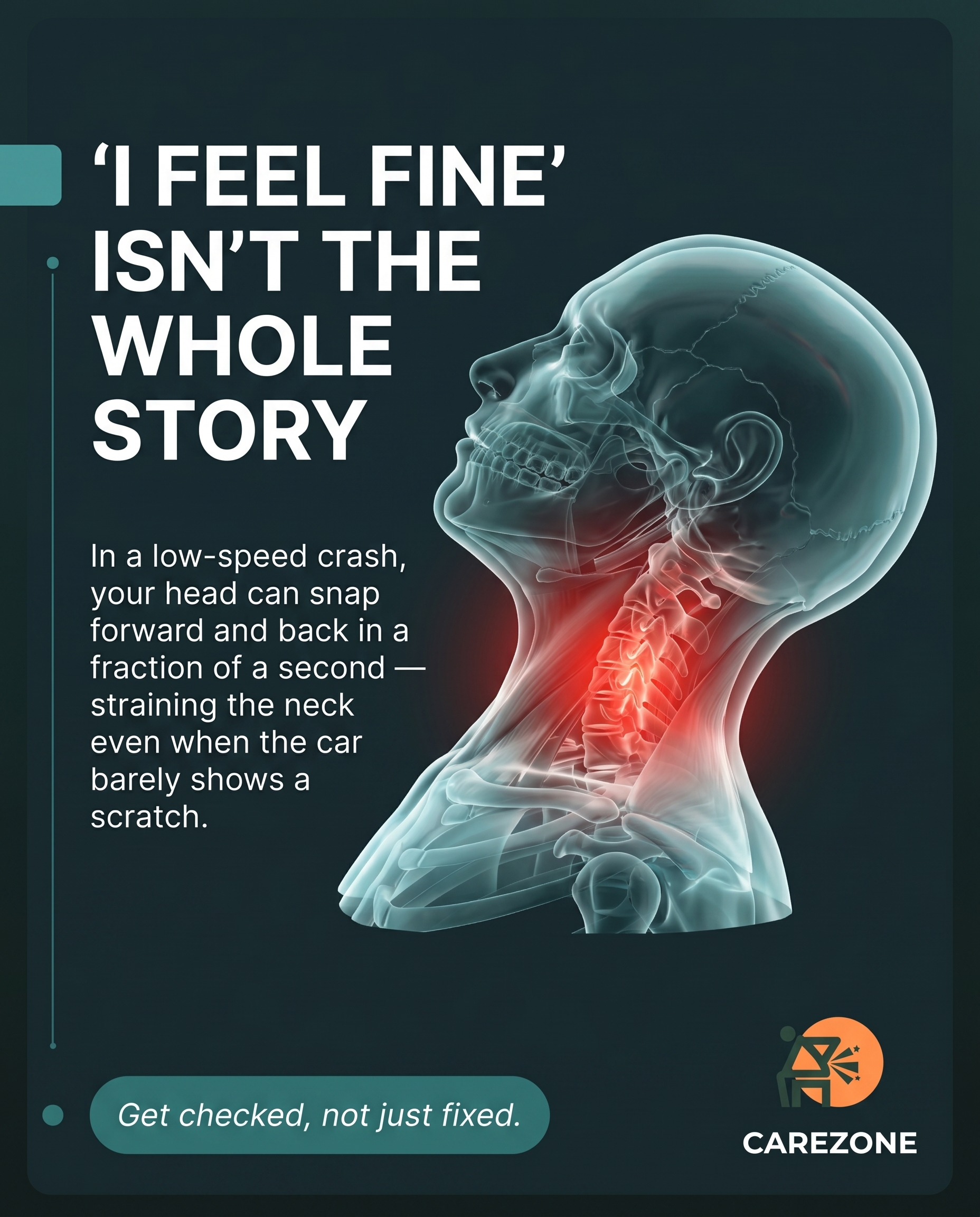
A 3D-rendered look at what happens to the body inside a low-speed collision — the head and neck snapping forward and back even when the car barely shows damage. The message lands on the gap between 'I feel fine' and what's actually straining beneath the surface, validating the stiffness or headaches that show up days after an accident as a genuine injury, not nerves.
Content: A 3D-rendered look at what happens to the body inside a low-speed collision — the head and neck snapping forward and back even when the car barely shows damage. The message lands on the gap between 'I feel fine' and what's actually straining beneath the surface, validating the stiffness or headaches that show up days after an accident as a genuine injury, not nerves.
Style: illustrative-3D
4.
T1S4A2
comparison-card
Problem-aware
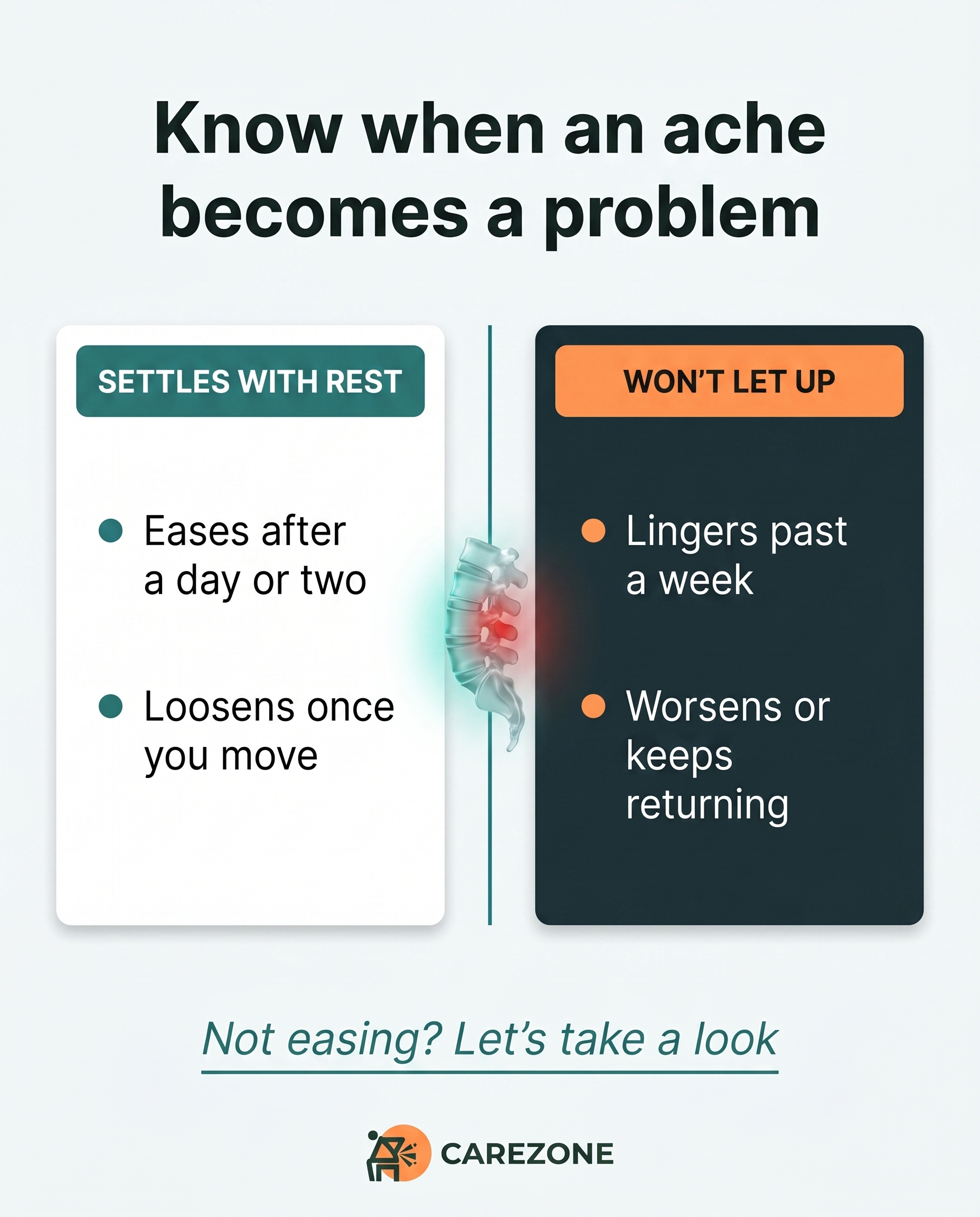
A comparison card contrasting everyday back soreness that eases with rest against back pain that lingers, worsens, or returns on a pattern. The angle gives the reader a clear line to check themselves against, confirming that what they're feeling has crossed from normal ache into a problem worth addressing.
Content: A comparison card contrasting everyday back soreness that eases with rest against back pain that lingers, worsens, or returns on a pattern. The angle gives the reader a clear line to check themselves against, confirming that what they're feeling has crossed from normal ache into a problem worth addressing.
Style: comparison-card
5.
L5S5A2
qa-card
Problem-aware
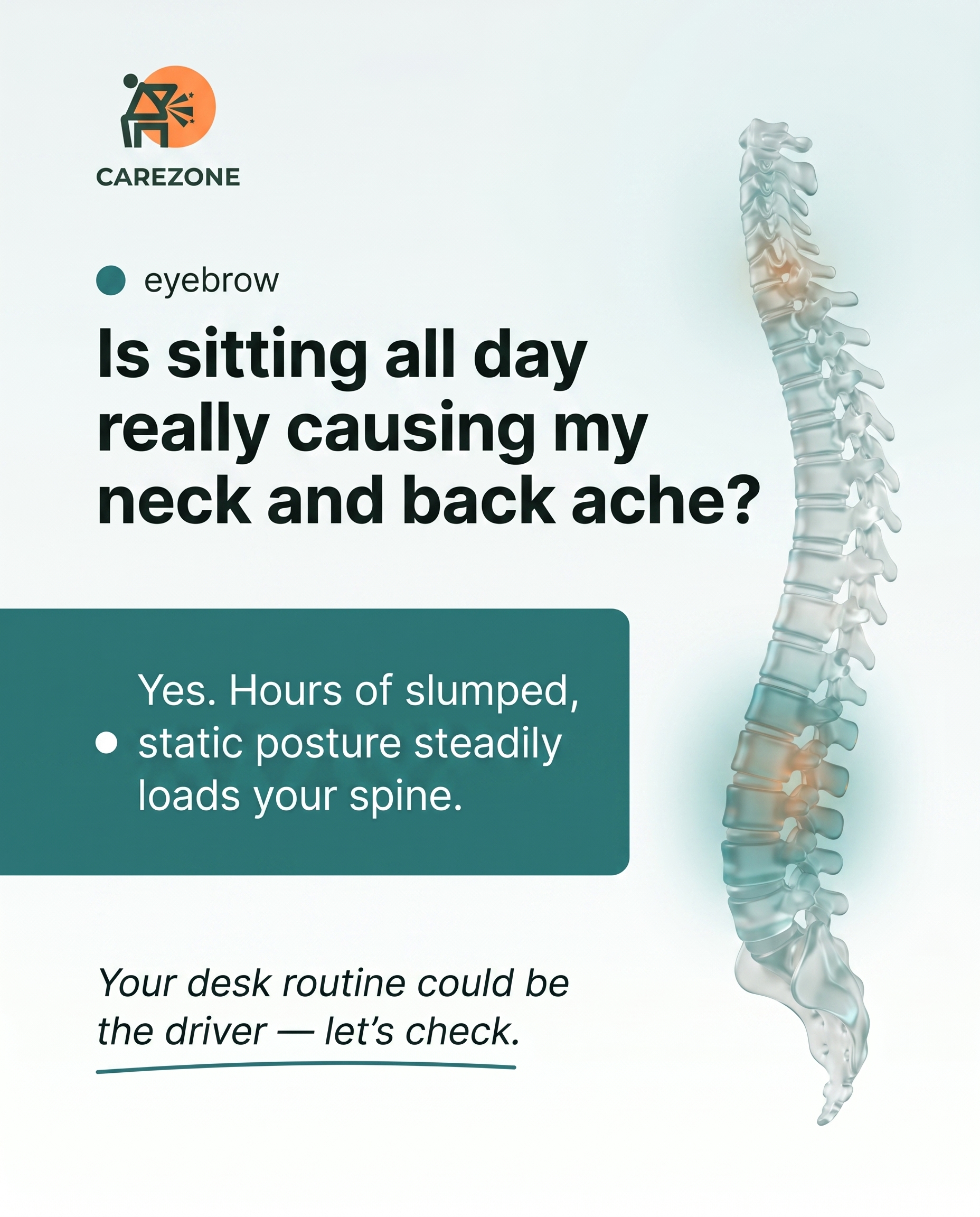
A Q&A card answering the question people quietly ask themselves: 'Is sitting all day really what's causing my neck and lower-back discomfort?' The answer validates the connection — hours of slumped, static posture steadily loads the spine — so the reader recognises their daily desk routine as a real driver of the ache, not an unrelated coincidence.
Content: A Q&A card answering the question people quietly ask themselves: 'Is sitting all day really what's causing my neck and lower-back discomfort?' The answer validates the connection — hours of slumped, static posture steadily loads the spine — so the reader recognises their daily desk routine as a real driver of the ache, not an unrelated coincidence.
Style: qa-card
6.
C3S6
myth-buster
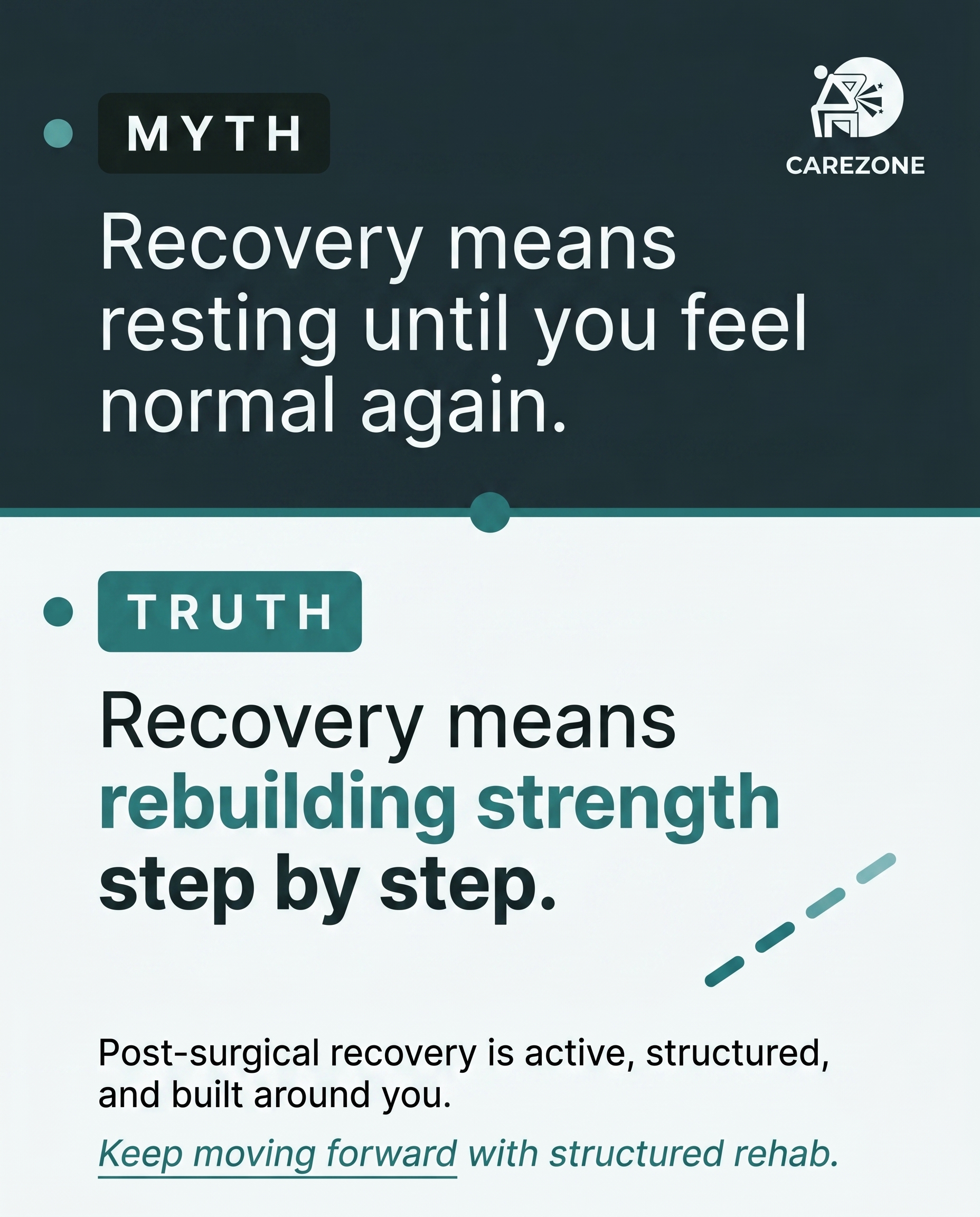
A myth-buster aimed at people rebuilding after surgery: the belief that recovery means resting until you simply feel normal again. The post reframes the clinic as a place where post-surgical patients work through structured rehab to actively rebuild function and strength — signalling to this segment that this is where people in their position keep moving forward.
Content: A myth-buster aimed at people rebuilding after surgery: the belief that recovery means resting until you simply feel normal again. The post reframes the clinic as a place where post-surgical patients work through structured rehab to actively rebuild function and strength — signalling to this segment that this is where people in their position keep moving forward.
Style: myth-buster
3
Developed Posts
6 posts · 2026-06-12T11:15
6 developed
▼
1.
T2S1A2
Rough Image Prompt
Elevated health and wellness lifestyle photography capturing the exact moment of neck strain in everyday life — a person seated, viewed from behind and slightly to the side at shoulder level (no face, no profile, cropped at the neck or shown from the back), one hand reaching up toward the back of the neck or shoulder as they twist their torso to look over their shoulder, the body language conveying that sudden catch and restricted turn. Soft natural daylight, calm and honest mood, real-life everyday context (a quiet home or neutral interior, or seated turning toward natural light) without identifiable clinical decor or branded equipment. The composition communicates recurring neck tightness and limited range of motion being noticed and taken seriously. Integrate brand colour cues naturally through fabric, soft tones, and lighting. Brand palette to draw from: #2C7A7B teal, #1A2E35 dark slate, #F4F7F7 off-white, #15201F near-black, #FFFFFF white, #4FA3A3 lighter teal tint. Typography in Inter for headline, Inter for supporting text, Inter italic for CTA. Text to render: headline 'That catch in your neck isn't just how it is.', supporting text 'Recurring stiffness and limited range are signals — worth addressing before they spread to your shoulders and head.', CTA 'Take the twinge seriously'. Logo placement varies by composition and is finalised downstream. Show the human subject only from behind or as torso, shoulders and hands; keep all faces out of frame; keep the setting generic and everyday.
Text Overlay
Caption
You know the moment. Reaching to check a blind spot, turning to a second screen, glancing over your shoulder — and there it is. That catch. That tightness you've started working around without even thinking about it.
Here's the thing: recurring neck stiffness and a limited range of motion aren't just how it is. They're a signal. And when you keep ignoring early symptoms, the strain rarely stays put — it can creep into your shoulders and trigger headaches before you've connected the dots.
The good news? Caught early, neck tightness responds well. Chiropractic care, targeted physical therapy, and soft tissue work can restore the movement you've been quietly missing.
So if you've been turning your whole body instead of your neck lately, take that as your cue.
🌐 https://www.carezonecenter.com
When did you last move your neck without thinking about it? Let us know below.
Hashtags
#NeckPain #ChiropracticCare #PostureHealth #RangeOfMotion #DontIgnoreThePain
2.
T3S2A2
Rough Image Prompt
A polished, editorial graphic-design post explaining how sciatica actually presents. The concept: reframe leg pain the reader has been dismissing as a traceable nerve issue rooted in the lower spine. Central supporting visual is a clean, anatomically accurate illustration of the lower spine, pelvis, and the sciatic nerve pathway tracing from the lumbar region down through the buttock and along the back of one leg — rendered in a clinical, translucent, glass-like style. Use a subtle accent glow along the nerve pathway to show the route of travel (sharp pain, numbness, tingling) on one side of the body. The illustration is a supporting accent element to a strong typographic treatment — typography leads, anatomy supports. Draw from these exact brand colours: #2C7A7B (teal), #1A2E35 (dark slate), #F4F7F7 (off-white), #15201F (near-black), #FFFFFF (white), #4FA3A3 (lighter teal tint). Use the nerve-path glow in teal tints to signal the symptom travel. Typography uses Inter for the headline, Inter for supporting text, and Inter italic for the CTA. Render the following text exactly: headline "It's not just leg pain — it's your nerve.", supporting text "Sciatica travels: sharp pain, numbness, or tingling from your lower back, through the buttock, and down one leg.", CTA "Trace the source with our team.". Keep the composition clean, intentional, and richly designed — not minimal-by-default. Logo placement should vary by composition and is finalised downstream. Keep all human reference to anatomical illustration only — no faces, no full figures, no clinic environment.
Text Overlay
Caption
That ache running down one leg? It might not be a leg problem at all.
Sciatica is a nerve issue that starts in your lower back. When the sciatic nerve gets compressed or irritated, the signal travels — sharp pain, numbness, or tingling that runs from the lower spine, through the buttock, and down one side of the leg. Often just one side. Often dismissed as vague soreness for weeks.
The important part: it's traceable. This isn't random discomfort you have to live with. There's a real, identifiable source — and once we find it, we can build a plan around it.
If your leg pain follows that path down from the back, it's worth getting it looked at properly. The longer a nerve stays irritated, the longer it tends to take to settle.
🌐 https://www.carezonecenter.com
Does your pain follow this path? Tell us where it travels.
Hashtags
#Sciatica #BackPain #NerveHealth #ChiropracticCare #SpineHealth
3.
T4S3A2
Rough Image Prompt
An anatomically accurate 3D illustration communicating what happens inside the body during a low-speed collision: a translucent, glass-like rendering of the human head, cervical spine, and upper neck musculature captured mid-whiplash motion — the head snapping forward and back relative to the torso, with the vertebrae of the neck showing the strain of rapid hyperextension and hyperflexion. Use a red glow to highlight the cervical spine and soft tissue at the point of maximum strain, signalling stress beneath the surface even though no external damage is visible. The concept is the gap between feeling fine and the hidden injury actually straining underneath. Clean clinical polish, translucent layered anatomy, no clinical environment, no faces, no full body — isolated anatomical subject on a neutral or subtle gradient field. Brand colours available: #2C7A7B teal, #1A2E35 dark slate, #F4F7F7 off-white, #15201F near-black, #FFFFFF white, #4FA3A3 lighter teal tint, with a red glow reserved for the strain indicator. Typography: Inter for headline, Inter for supporting text, Inter italic for CTA. Render the following text: headline "'I FEEL FINE' ISN'T THE WHOLE STORY", supporting text "In a low-speed crash, your head can snap forward and back in a fraction of a second — straining the neck even when the car barely shows a scratch.", CTA "Get checked, not just fixed." Logo placement varies by composition and is finalised downstream.
Text Overlay
Caption
The car had barely a scratch. So you walked away, told everyone you were fine, and got on with your day.
Then three days later — the stiffness. The headaches. The neck that won't turn the way it used to.
That's not nerves. That's not you being dramatic. In a low-speed collision, your head can snap forward and back in a fraction of a second. The damage outside the car and the strain inside your neck are two completely different things.
Whiplash often shows up days later, once the adrenaline fades and the tissue settles. By then it's easy to talk yourself out of getting it looked at. Don't. Early assessment means we catch what's straining beneath the surface before it becomes something that lingers.
Feeling fine is a feeling — not a diagnosis.
If you've been in an accident recently, even a minor one, get checked.
🌐 https://www.carezonecenter.com
Hashtags
#WhiplashRecovery #AutoAccidentCare #NeckPainRelief #ChiropracticCare #InjuryRecovery
4.
T1S4A2
Rough Image Prompt
A clean, typographic comparison-card design contrasting two distinct states of back pain to help the reader self-assess. The post communicates a clear dividing line: ordinary back soreness that settles with rest versus persistent back pain that lingers, worsens, or returns in a recurring pattern. Two equally-weighted sides, each with a concrete content-derived label and short supporting descriptors. Build the composition primarily from typography with supporting accent elements. Use a small, supporting anatomical illustration of the lower spine/lumbar region in a clean translucent glass-like 3D render style as a connecting visual accent — one side neutral/calm, the other with a subtle red glow indicating ongoing irritation. Typographic-led; no clinic interiors, no treatment scenes, no people, no faces. Brand palette to draw from (exact hex): #2C7A7B teal/healing green, #1A2E35 dark slate, #F4F7F7 off-white, #15201F near-black, #FFFFFF white, #4FA3A3 lighter teal tint. Typography: Inter for the labels and headline, Inter for supporting descriptors, Inter italic for the CTA. Text content to render — labels: "SETTLES WITH REST" and "WON'T LET UP". Side one descriptors: "Eases after a day or two" and "Loosens once you move". Side two descriptors: "Lingers past a week" and "Worsens or keeps returning". Headline: "Know when an ache becomes a problem". CTA: "Not easing? Let's take a look". Logo placement should vary by composition and is finalised downstream. Keep the rendering editorial and intentional with brand colours integrated throughout.
Text Overlay
Caption
Most back soreness is your body grumbling, not warning you. You tweak something, you rest, and within a day or two it quietly settles. That kind of ache loosens up once you get moving again.
The pain worth paying attention to behaves differently. It lingers past a week. It worsens instead of fading. Or it keeps coming back on a pattern you've started to recognise. That's no longer a normal ache, it's a signal.
The simplest check: rest helps the everyday stuff, but it does nothing for the problem stuff. If you've been waiting it out and it hasn't budged, waiting longer rarely changes the story.
If your back has crossed that line, it's worth getting it looked at properly rather than guessing.
🌐 https://www.carezonecenter.com
Which side does your back sit on right now? Tell us below.
Hashtags
#BackPainRelief #ChiropracticCare #SpineHealth #PainAwareness
5.
L5S5A2
Rough Image Prompt
A clean, typographic Q&A card for a chiropractic and rehabilitation clinic, addressing the link between all-day sitting and neck and lower-back discomfort. Typographic-led design with a supporting visual accent. Components required: a clearly framed question, a validating answer, and a small supporting anatomical illustration of a spine showing loaded or compressed lower cervical and lumbar regions — rendered as a clean, semi-translucent glass-like 3D anatomical accent with a subtle warm highlight (using the teal accent) at the neck and lower-back areas to indicate stress points. Keep the anatomical element small and supporting, not full-frame. Question text to render: 'Is sitting all day really causing my neck and back ache?' Answer text to render: 'Yes. Hours of slumped, static posture steadily loads your spine.' CTA text to render: 'Your desk routine could be the driver — let's check.' Typography: Inter for the question, Inter for the answer and supporting text, Inter italic for the CTA. Brand colours available (draw from this palette): #2C7A7B teal, #1A2E35 dark slate, #F4F7F7 off-white, #15201F near-black, #FFFFFF white, #4FA3A3 lighter teal tint. Use a clear question-and-answer hierarchy. Subtle gradient background in brand colours is acceptable. Logo placement should vary by composition and is finalised downstream. Show a polished, intentional editorial feel with the anatomical render reading as a representation rather than a clinical photograph. No faces, no clinic interiors, no treatment scenes — keep it typographic with a supporting anatomical accent.
Text Overlay
Caption
That ache you blame on a bad night's sleep? It might be your chair.
Here's the quiet truth: sitting for hours in a slumped, static position steadily loads the spine. Your neck creeps forward, your lower back rounds, and the muscles meant to support you switch off. Hold that posture day after day and the discomfort stops feeling random — it starts feeling like part of your routine.
The good news: this kind of strain responds well to care. Targeted adjustments, movement, and a few posture changes can take the pressure off the areas carrying the most load.
If your neck or lower back has been talking to you by the end of every workday, it's worth listening sooner rather than later.
🌐 https://www.carezonecenter.com
Does your discomfort flare most after long hours at your desk? Tell us where you feel it.
Hashtags
#NeckPain #BackPain #PostureMatters #DeskJobHealth #ChiropracticCare
6.
C3S6
Rough Image Prompt
Myth-buster style post on post-surgical recovery, communicating that healing after surgery is not passive waiting but active, structured rehabilitation that rebuilds strength and function. Typographic-led design with bold impact. Components: a MYTH label paired with a single myth statement, a TRUTH label paired with a single truth statement, and a short CTA. Optional supporting accent: a small, clean anatomical illustration of a joint or limb in motion (e.g. a knee or shoulder articulating) rendered in a translucent, glass-like clinical style, OR an abstract upward-progression motif (ascending dashes or steps) symbolising forward momentum — kept small and supporting so the typography leads. Brand colours to draw from: #2C7A7B teal, #1A2E35 dark slate, #F4F7F7 off-white, #15201F near-black, #FFFFFF white, #4FA3A3 lighter teal tint. Typography: Inter for the labels and headline statements, Inter for supporting text, Inter italic for the CTA. Text content to render: MYTH label reading 'MYTH', myth statement reading 'Recovery means resting until you feel normal again.', TRUTH label reading 'TRUTH', truth statement reading 'Recovery means rebuilding strength step by step.', CTA reading 'Keep moving forward with structured rehab.' Clear visual contrast between the myth side and the truth side so the reframe lands instantly. Clean, calm, clinical polish throughout. Logo placement should vary by composition and is finalised downstream.
Text Overlay
Caption
After surgery, it is tempting to think the plan is simple: rest, wait, and one day you will just feel like yourself again. But strength does not come back from waiting. It comes back from rebuilding.
Post-surgical recovery works best when it is structured. Guided exercise, gradual loading, and steady progress are how function returns. Each session is a step forward, not a holding pattern.
This is where people in your position keep moving. Our team supports post-surgical patients through rehab that rebuilds strength and confidence at a pace that respects where you are right now.
If you are recovering from surgery and unsure what comes next, the next step does not have to be guesswork.
🌐 https://www.carezonecenter.com
What is one movement you are working to get back? Tell us below.
Hashtags
#PostSurgicalRecovery #Rehabilitation #ChiropracticCare #RebuildStrength
4
Refined Image Prompts
6 prompts · 2026-06-12T11:16
6 prompts refined
▼
1.
T2S1A2
Refined Image Prompt
Elevated health and wellness lifestyle photography capturing the exact moment of neck strain in everyday life. A person is seated in a quiet, neutral home interior, viewed from behind and slightly to the side at shoulder level — no face, no profile, cropped at the neck and shown from the back so only the torso, shoulders, neck and hands are visible. One hand reaches up toward the back of the neck and shoulder as the body twists at the torso, conveying that sudden catch and restricted turn, the body language reading as recurring stiffness and limited range of motion being noticed and taken seriously. The subject wears soft fabric in muted teal and off-white tones that draw naturally from the brand palette. Soft natural daylight enters from one side, gentle and honest, falling across the shoulders and neck, with a calm understated mood. The everyday setting is generic and free of identifiable clinical decor or branded equipment. Real photographic texture in skin, fabric and ambient light, shallow natural depth of field with a softly blurred background.
The overall register is clean clinical injury-recovery with warm orange accents, calm and serious without alarm.
Colour application draws from the brand bank. The photographic environment carries off-white #F4F7F7 and lighter teal tint #4FA3A3 through fabric, soft tones and natural light, with deeper teal #2C7A7B and dark slate #1A2E35 grounding the shadow areas.
Lay a clean text zone across the lower-left portion of the frame, set over a softly translucent panel in dark slate #1A2E35 with slight 4px rounded corners that lets the photography breathe behind it.
Headline text reads "That catch in your neck isn't just how it is." set in Inter, in white #FFFFFF, positioned at the top of the text zone, given clear breathing room.
A short solid accent block in warm orange sits directly beneath the headline as a divider marker, paired with a small solid dot marker in lighter teal tint #4FA3A3 to its left, drawing the eye between headline and supporting line.
Supporting text reads "Recurring stiffness and limited range are signals — worth addressing before they spread to your shoulders and head." set in Inter, in off-white #F4F7F7, placed below the accent divider in a comfortably sized block.
CTA text reads "Take the twinge seriously" set in Inter italic, in warm orange, contained within a soft pill button with slight 5px rounded corners and a thin warm orange outline, positioned at the base of the text zone with a small solid dot marker preceding it.
Place the attached logo in the top-right corner at a modest, balanced scale with clear surrounding space, sitting cleanly over the photography or a subtle slate underlay if contrast requires it. Render the logo exactly as supplied, preserving its original colours, proportions, lettering and spacing without recolouring, redrawing, distorting or restyling it.
Constraints: keep all faces fully out of frame, showing only the back, torso, shoulders, neck and hands. Keep the setting generic and everyday with no identifiable clinical decor or branded equipment. Maintain a calm, honest, respectful tone throughout. Keep every rectangular surface at a consistent slight 4 to 5px corner radius. Use only the specified hex colours and the warm orange accent. Render all text crisply and legibly in Inter as specified, with accurate spelling and clean alignment.
2.
T3S2A2
Refined Image Prompt
A polished, editorial graphic-design composition on a clean off-white #F4F7F7 surface, structured as a vertical split where typography leads on the left and a clinical anatomical illustration supports on the right. The overall register is clean clinical injury-recovery — precise, calm, medically credible, with controlled warm accents punctuating an otherwise cool teal-and-slate palette.
On the right portion of the composition, render an anatomically accurate illustration of the lower human spine, pelvis, and sciatic nerve pathway. The lumbar vertebrae and pelvic bone are rendered in a translucent, glass-like clinical style in soft #4FA3A3 lighter teal tint with subtle #FFFFFF highlights, giving a frosted, semi-transparent depth. The sciatic nerve traces clearly from the lumbar region, down through one buttock, and along the back of one leg, rendered as a luminous line in #2C7A7B teal with a soft accent glow that intensifies along its route to signal symptom travel — sharp pain, numbness, tingling — on one side of the body only. Small solid dot markers in #2C7A7B sit at three points along the nerve path (lower back, buttock, back of leg) to mark the route. Keep all human reference to anatomical illustration only — no faces, no full figures, no clinic environment.
On the left portion, the typographic treatment leads. The headline reads exactly "It's not just leg pain — it's your nerve." set in Inter, in near-black #15201F, large and confident, with the words "your nerve." emphasised in #2C7A7B teal to tie into the nerve illustration. Beneath the headline, a thin solid horizontal block in #2C7A7B acts as a divider accent. Below it, the supporting text reads exactly "Sciatica travels: sharp pain, numbness, or tingling from your lower back, through the buttock, and down one leg." set in Inter, in dark slate #1A2E35 at a comfortable readable size with generous line spacing.
Near the lower-left, place the CTA inside a slight-cornered (4px radius) solid block in #2C7A7B teal, with the text reading exactly "Trace the source with our team." set in Inter italic in #FFFFFF white. A single small solid dot marker in #FFFFFF sits to the left of the CTA text as an accent.
Apply slight 3-6px rounded corners uniformly to all rectangular surfaces including the CTA block and any callout containers. Use solid blocks and dot markers as the consistent accent language throughout.
Lighting is soft, even, and clinical, with the nerve-path glow providing the only luminous focal point. Composition is intentional, richly designed, and balanced — typography weighted left, anatomy supporting right, with breathing room between elements.
Place the attached logo in the top-left corner at a small, restrained scale. Preserve the logo exactly as supplied — do not redraw, recolour, distort, or alter its proportions, lettering, or shape in any way.
Constraints: keep the palette restricted to the brand colours #2C7A7B, #1A2E35, #F4F7F7, #15201F, #FFFFFF, and #4FA3A3. Render all anatomy as illustration only, with no faces, no full human figures, and no clinic interior. Keep all text exactly as quoted with no spelling or punctuation changes. Maintain a clean, uncluttered, professional medical-design feel.
3.
T4S3A2
Refined Image Prompt
An anatomically accurate 3D illustration set against a deep dark slate field of #1A2E35 with a subtle radial gradient lifting toward #15201F at the edges, creating a calm clinical depth. The central subject is a translucent, glass-like rendering of the human head, cervical spine, and upper neck musculature captured mid-whiplash motion — the head snapping forward and back relative to the torso, the cervical vertebrae showing the strain of rapid hyperextension and hyperflexion. The translucent layered anatomy carries cool teal undertones drawn from #4FA3A3 and #2C7A7B across the glass surfaces, with faint internal refractions catching the light. A warm red glow concentrates at the cervical spine and soft tissue at the point of maximum strain, radiating outward from beneath the surface to signal hidden stress even though no external damage is visible. No faces, no full body, no clinical environment — the isolated anatomical subject floats centred-right in the frame, allowing the left vertical third for text.
Composition is split: the anatomical render occupies the right two-thirds, the text column anchors the left third. Soft studio lighting from the upper left models the translucent forms with clean rim highlights and gentle ambient occlusion, polished and precise.
Text elements, all in Inter, set in white #FFFFFF for maximum legibility against the dark surface:
Headline in Inter, large, stacked across two to three lines in the upper left: "'I FEEL FINE' ISN'T THE WHOLE STORY". A small solid block of #4FA3A3 with slightly rounded 4px corners sits as a marker to the left of the first line, drawing the eye into the headline.
Supporting text in Inter, smaller, set in #F4F7F7 beneath the headline in a tidy left-aligned paragraph: "In a low-speed crash, your head can snap forward and back in a fraction of a second — straining the neck even when the car barely shows a scratch."
CTA in Inter italic, set inside a soft pill-shaped container with 6px rounded corners filled with #2C7A7B, white text reading: "Get checked, not just fixed." positioned in the lower left, with a small solid dot marker in #4FA3A3 placed just before it.
Thin dot markers in #4FA3A3 used sparingly to punctuate the text column and reinforce visual rhythm. All rectangular surfaces, blocks, and containers use slight 4 to 6px rounded corners consistently.
Place the attached logo in the bottom right corner at a modest, balanced scale, rendered cleanly in its original form. Preserve the logo exactly as supplied — do not redraw, recolour, distort, or reinterpret its lettering, proportions, or marks; reproduce it faithfully.
Overall register: clean clinical injury-recovery, calm and authoritative, with the warm red glow reserved exclusively as the strain indicator on the anatomy and never applied to text or UI elements. Keep the composition uncluttered, the anatomy the clear focal hero, and the typography crisp and well-spaced.
4.
T1S4A2
Refined Image Prompt
A clean, typographic comparison-card design built primarily from layout-driven typography, set on a light surface in off-white #F4F7F7. The composition is divided into two equally-weighted vertical halves separated by a thin central divider line in teal #2C7A7B, creating a clear self-assessment split between ordinary back soreness and persistent back pain. The overall register is clean clinical injury-recovery, calm and editorial, with restrained warm accent moments.
At the top, centred and spanning the full width, the headline "Know when an ache becomes a problem" set in Inter, in near-black #15201F, generously spaced with comfortable margins above and below.
Below the headline, the two comparison columns sit side by side. The left column is a clean card with a 4px corner radius, surfaced in white #FFFFFF with a soft, barely-there shadow. At its top a solid block badge with a 4px corner radius filled in teal #2C7A7B containing the label "SETTLES WITH REST" set in Inter, in white #FFFFFF. Beneath the badge, two supporting descriptors stacked vertically, each preceded by a small solid dot marker in teal #2C7A7B: "Eases after a day or two" and "Loosens once you move", set in Inter, in near-black #15201F.
The right column mirrors the left as a card with a 4px corner radius, surfaced in dark slate #1A2E35 to signal the more serious state. At its top a solid block badge with a 4px corner radius filled in a warm orange tone containing the label "WON'T LET UP" set in Inter, in white #FFFFFF. Beneath it, two supporting descriptors stacked vertically, each preceded by a small solid dot marker in the same warm orange: "Lingers past a week" and "Worsens or keeps returning", set in Inter, in white #FFFFFF.
Positioned between the two columns near the centre, overlapping the divider as a connecting visual accent, a small supporting anatomical illustration of the lower lumbar spine rendered in a clean translucent glass-like 3D style with soft refractive highlights. The left-facing side of the illustration appears neutral and calm with cool teal #4FA3A3 internal light; the right-facing side carries a subtle warm red glow indicating ongoing irritation, the glow soft and contained, not dominating the frame.
Near the bottom, centred, the CTA "Not easing? Let's take a look" set in Inter italic, in teal #2C7A7B, with a thin underline accent in teal #2C7A7B beneath it.
The clinic logo placed in the bottom-centre with clear surrounding space, small and unobtrusive. Render the logo exactly as supplied in the attached logo file, preserving its original colours, proportions, and lettering without recolouring, redrawing, or distorting it.
Lighting is soft, even and editorial, evoking a calm clinical environment. Composition is balanced, intentional and uncluttered with generous negative space throughout. Brand colours integrated cohesively across every element.
Constraints: typographic-led design with all text crisp, legible and correctly spelled; no clinic interiors; no treatment scenes; no people; no faces; warm orange used only as a controlled accent on the right column and the irritation glow; all rectangular surfaces use consistent 4px corners.
5.
L5S5A2
Refined Image Prompt
A clean, editorial typographic Q&A card for a chiropractic and rehabilitation clinic, built on a subtle vertical gradient background flowing from off-white #F4F7F7 at the top down to a soft, barely-there #FFFFFF at the base, giving an airy clinical lightness. The overall register is clean clinical injury-recovery with calm precision, organised, spacious, and reassuring.
Composition is typographic-led with a vertical hierarchy. In the upper portion, a small solid teal #2C7A7B dot marker sits inline to the left of a short eyebrow-style label, with the main question directly beneath it. The question reads "Is sitting all day really causing my neck and back ache?" set in Inter, in near-black #15201F, as the dominant typographic element, arranged across two or three lines with generous line spacing and a left-aligned axis.
Below the question, separated by clear breathing space, a solid teal #2C7A7B block with slight 4px rounded corners forms a contained answer panel. Inside it, the answer reads "Yes. Hours of slumped, static posture steadily loads your spine." set in Inter, in white #FFFFFF, left-aligned, comfortably padded within the block. A small solid white dot marker sits to the left of the word "Yes" to draw the eye to the validating answer.
In the lower portion, the CTA reads "Your desk routine could be the driver — let's check." set in Inter italic, in dark slate #1A2E35, smaller than the question, left-aligned, with a thin teal #2C7A7B underline accent running beneath it as a supporting attention cue.
Positioned to the right side of the composition, occupying roughly the right third and kept small and supporting rather than full-frame, is a clean semi-translucent glass-like 3D anatomical illustration of a human spine shown in a gentle seated curvature. The spine reads as a polished, intentional editorial representation rather than a clinical photograph, rendered in cool translucent off-white and pale teal #4FA3A3 glass tones with soft refractive depth. Subtle warm teal #2C7A7B glow highlights mark the lower cervical region at the neck and the lumbar region at the lower back, indicating loaded, compressed stress points. The render floats cleanly against the gradient with a soft ambient shadow beneath it.
Lighting is soft, diffused, and even, with gentle studio illumination giving the glass spine a delicate sheen and the overall card a bright, calm clinical mood. All rectangular surfaces, including the answer block, carry slight 4px rounded corners applied uniformly.
Place the provided logo file in the top-left corner at a small, restrained scale with clear margin around it. Reproduce the logo exactly as supplied, preserving its original colours, proportions, lettering, and spacing without recolouring, redrawing, distorting, or regenerating any part of it.
Constraints: keep the layout typographic with the anatomical spine as a small supporting accent only. No faces, no people, no clinic interiors, no treatment scenes, no medical equipment. Use only the specified hex colours #2C7A7B, #1A2E35, #F4F7F7, #15201F, #FFFFFF, and #4FA3A3. Use only Inter for all text, with Inter italic reserved for the CTA. Render all text exactly as quoted with correct spelling and clear, legible spacing. Keep ample negative space, a polished editorial feel, and a calm, uncluttered composition.
6.
C3S6
Refined Image Prompt
A vertical myth-buster social media graphic for a clinical injury-recovery practice, typographic-led with bold editorial impact, split into two clearly contrasting horizontal zones.
The upper zone is the MYTH side, surfaced in dark slate #1A2E35. In the top-left of this zone sits a small solid block badge in near-black #15201F with slightly rounded 4px corners, containing the word "MYTH" in Inter, set in off-white #F4F7F7, letter-spaced and uppercase. To the left of the badge sits a single small dot marker in lighter teal tint #4FA3A3. Below the badge, the myth statement reads "Recovery means resting until you feel normal again." in Inter, set in off-white #F4F7F7 at large display size, left-aligned, generous line spacing, occupying the width of the zone with comfortable margins. The myth zone carries a slightly muted, subdued feel.
A clean horizontal divider in teal #2C7A7B separates the two zones, with a single solid teal dot marker centred on the line as a visual hinge.
The lower zone is the TRUTH side, surfaced in off-white #F4F7F7, brighter and more open than the myth zone above. In the top-left of this zone sits a small solid block badge in teal #2C7A7B with slightly rounded 4px corners, containing the word "TRUTH" in Inter, set in white #FFFFFF, letter-spaced and uppercase. A single solid teal dot marker sits to the left of the badge. Below the badge, the truth statement reads "Recovery means rebuilding strength step by step." in Inter, set in near-black #15201F at large display size, left-aligned, with the words "rebuilding strength step by step" emphasised through teal #2C7A7B colour treatment so the reframe lands instantly.
In the lower-right of the truth zone, as a small supporting accent kept secondary to the typography, an abstract upward-progression motif of four ascending short dashes climbing left to right in teal #2C7A7B and lighter teal tint #4FA3A3, symbolising forward momentum and structured rebuild.
Near the base of the truth zone, the supporting text reads "Post-surgical recovery is active, structured, and built around you." in Inter, set in near-black #15201F at small body size, left-aligned.
Beneath the supporting text sits the CTA in a thin teal #2C7A7B underline accent treatment, reading "Keep moving forward with structured rehab." in Inter italic, set in teal #2C7A7B, left-aligned.
Place the supplied logo file in the top-right corner of the upper myth zone at small clean scale, rendered in white or off-white so it reads clearly against the dark slate surface. Preserve the logo exactly as supplied — do not redraw, restyle, recolour beyond simple reversal for legibility, distort, or regenerate its lettering or mark.
Overall register: clean clinical injury-recovery polish with calm restraint and warm confidence, ample whitespace, crisp alignment, soft even lighting, flat clinical finish with no heavy shadows or gradients. All rectangular elements use slightly rounded 4px corners uniformly.
Constraints: keep the typography as the dominant element with the accent motif small and supporting; maintain clear contrast between the muted myth zone and the brighter truth zone; render all text exactly as quoted with correct spelling; keep the composition balanced, legible, and uncluttered; use only the specified hex colours.
5
Rendered Images
6 rendered · 2026-06-12T11:16
6 rendered
▼
T2S1A2
1856×2304
T3S2A2
1856×2304
T4S3A2
1856×2304
T1S4A2
1856×2304
L5S5A2
1856×2304
C3S6
1856×2304